Affiliate Disclosure: This post may contain affiliate links. If you purchase through these links, I may earn a small commission at no extra cost to you.
Over the years, as I’ve hosted countless gatherings, I’ve come to a profound realization: the true goal of a party game isn’t always to crown a winner, but to connect people. The most memorable games are often cooperative, not competitive, because they create shared stories, foster teamwork, and leave everyone feeling good, rather than creating sore losers or awkward tensions. This article shares my philosophical insight into cultivating harmony and “hoppiness” at your Easter gathering with cooperative games that bring everyone together, ensuring laughter, positive interactions, and a truly inclusive spirit.
The Pitfalls of Competition: Why Some Games Lead to Conflict
While a little friendly competition can be fun, too much emphasis on winning can sometimes detract from the overall joy of a gathering, especially during a family-focused holiday like Easter.
Understanding Different Play Styles and Personalities
Every group is a mix of personalities. Some thrive on competition, while others shrink from it. When games are solely focused on individual victory, it can inadvertently create divisions, highlight skill disparities, and make some guests feel uncomfortable or left out. Recognizing these different play styles is crucial for a host who aims for universal enjoyment.
The Host’s Desire for a Peaceful Gathering
As hosts, our deepest desire is often for a peaceful, joyful, and harmonious gathering. We want to see smiles, hear laughter, and witness genuine connection. Games that foster conflict or leave some guests feeling defeated can run counter to this desire. Cooperative games offer a beautiful alternative, aligning perfectly with the spirit of togetherness that Easter embodies.
Our Favorite Cooperative Easter Games for a United Front
Cooperative games are designed to have players work together towards a common goal, making them perfect for fostering unity and shared success. Here are some of my top picks for your Easter celebration.
Team-Based Passing Games for Shared Joy
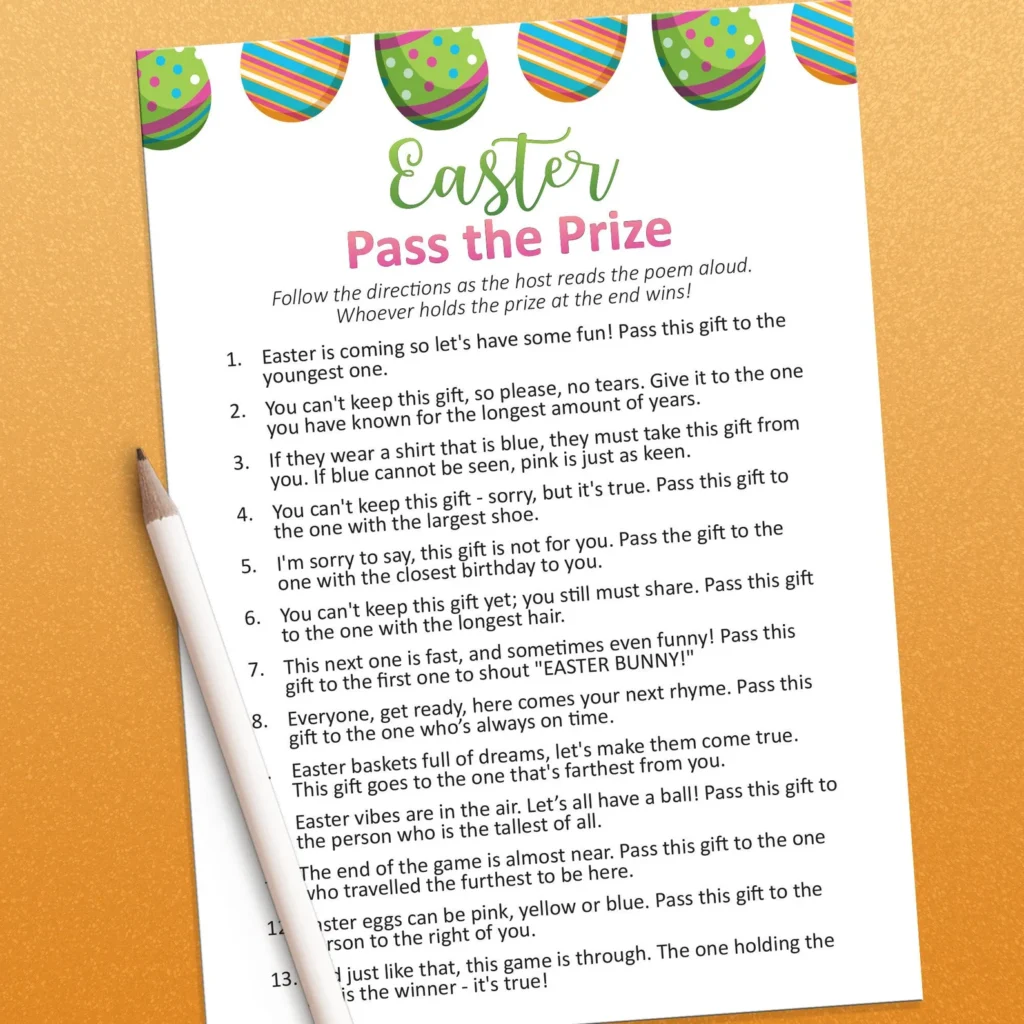
Games that involve passing objects or sharing a narrative are inherently cooperative and excellent for encouraging group interaction. Our Easter Pass the Prize game can be positioned as a support game that promotes cooperation and shared excitement, rather than individual winning. Instead of one winner, the focus is on the collective experience of passing the prize, listening to the story, and the anticipation of who will hold it at the end of each segment. Reviews often mention “added laughs and fun memories!” which perfectly encapsulates the emotional benefit of this type of game. It’s a gentle way to engage everyone, ensuring that the fun is distributed and the focus remains on the shared activity.
Break the ice and get guests mingling with this simple, no-stress Pass the Prize game. It’s all about fun, not competition! Grab your printable game here!
Collaborative Storytelling Games
Imagine a game where everyone contributes to a single, evolving Easter story. Each person adds a sentence or a paragraph, building on what came before. This type of game encourages creativity, active listening, and a sense of shared ownership over the narrative. There’s no right or wrong, just collective imagination. You can start with a simple prompt, like “The Easter Bunny woke up feeling particularly mischievous this year…” and let your guests take it from there.
Group Challenges with a Common Goal
These games present a challenge that the entire group must overcome together. This could be a themed puzzle that needs to be solved, a riddle that requires collective brainstorming, or even a creative building challenge using limited materials. The success of the game depends on everyone contributing their ideas and working in sync. The sense of accomplishment when the group achieves its goal is incredibly rewarding and strengthens bonds.
Tips for Fostering a Cooperative Spirit
As the host, you play a vital role in setting the tone and guiding the cooperative spirit of your Easter games.
Emphasizing Teamwork Over Individual Scores
Before starting a cooperative game, clearly state that the goal is to work together. If there are any scoring elements, frame them as collective achievements rather than individual tallies. For instance, in a game like Easter Pass the Prize, emphasize the shared laughter and the journey of the prize rather than who ultimately “wins” it. This subtle shift in language can significantly impact the group’s mindset.
Celebrating Participation, Not Just Winning
In cooperative games, every contribution is valuable. Make sure to acknowledge and celebrate everyone’s efforts, ideas, and participation. This reinforces the idea that the process of playing together is more important than the outcome. A simple “Great idea, Sarah!” or “Fantastic teamwork, everyone!” can go a long way in making all guests feel appreciated and included.
More Ways to Create a Harmonious Easter
By choosing cooperative games, you’re actively designing an Easter celebration that prioritizes connection, shared joy, and a peaceful atmosphere.
For games that truly include everyone, from the youngest to the oldest, check out our Multi-Generational Easter Games. This pillar article is full of ideas to ensure no one is left out.
And to get everyone comfortable and chatting from the moment they arrive, explore our Fun Easter Icebreakers. These are perfect for setting a relaxed and engaging tone for your entire gathering.
By embracing the spirit of cooperation, your Easter gathering will be filled with genuine connection, shared laughter, and a beautiful sense of unity. Happy hosting!